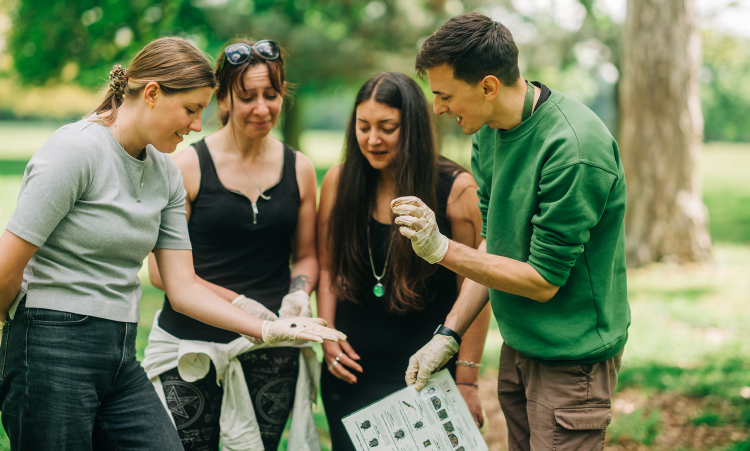
Connor has led nature tours in the UK, Singapore, Malaysia, and Indonesia. He has a passion for connecting people with all wildlife, but has a particular love for inverterbates. Over 4,000 people have attended one of his tours to date, delivered for a wide variety of clients.
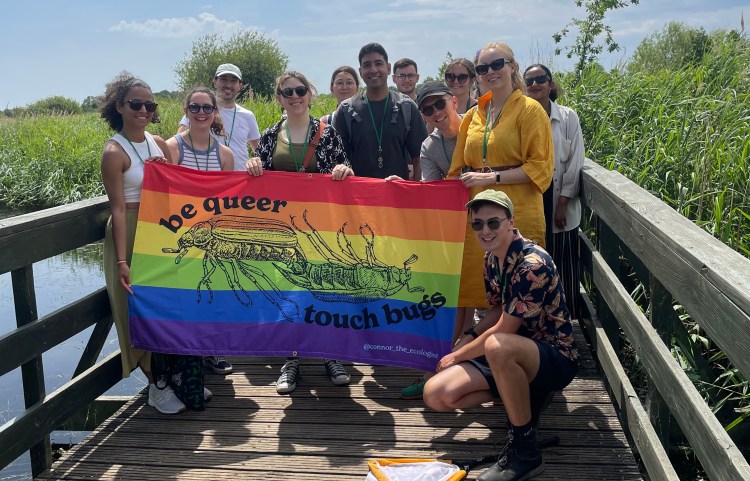
The Birds & the Bees: Queer Ecology Tour
Did you know that trees can change their sex, that slugs are non-binary, and that many species of birds pair up into same-sex couples? Connor developed a guided walk challenging perceptions of what is considered “natural” or “unnatural”. Discover the seedy lives of plants and how “Queerness” can be found in everything from birds to bugs. For more information on Queer Ecology, see here. Over the past three years, over 1,500 people have attended Connor’s Queer Ecology walks.
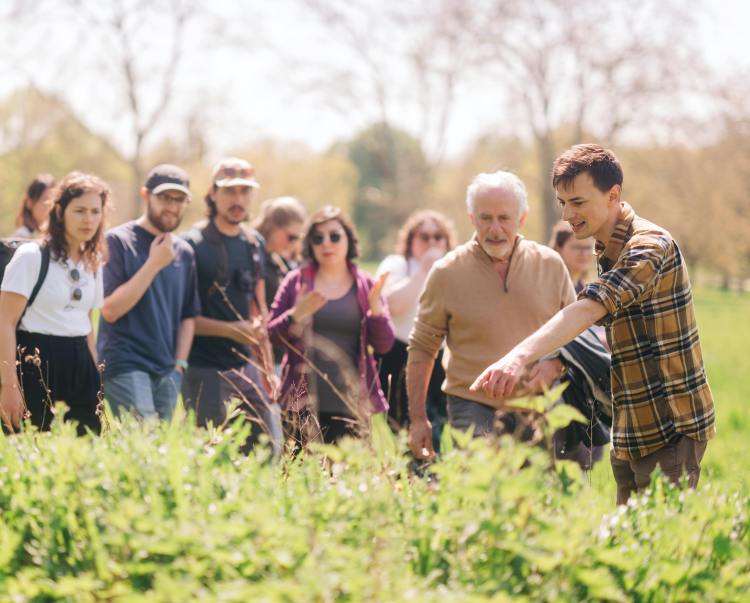
Urban Ecology Tour
Nature is all around us, though most of us don’t know to look in the right places. Connor’s tours focus on hidden habitats found right in front of us. You’ll be flipping over logs for woodlice, listening for bird song, taking a closer look at the lichens and mosses growing on benches, learning to identify trees, and gaining an appreciation for the smallest of creatures. Many people think that cities are devoid of nature, but this tour will prove them wrong!

Cyanotype Printing Course
Connor has delivered several natural printmaking courses. These workshops introduce participants to the history of cyanotypes, a photographic printing process popularised by Anna Atkins in the 1840s, who used it to document plants and seaweed species. The process uses light-sensitive ink and pressed plants to create blueprint-style prints. Participants also learn to identify common plants by their leaves and flowers, building foundational botanical skills.
Invertebrate Identification Courses
Connor has delivered a range of identification courses such as:
- Identifying Insects for Beginners
- Identifying Pondlife (Amphibians, Snails, Dragonflies and Waterbugs)
- Deadwood Invertebrates (Beetles, Woodlice, Centipedes and Millipedes)